RSS Feed for Tacoma Baha’iTacoma Baha’i

The power of human utterance

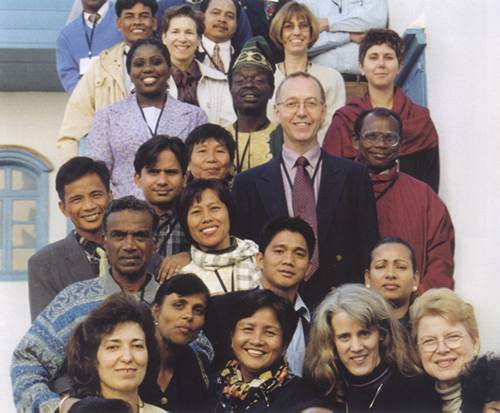
The Hands of the Cause of God on April 22, 1963, after announcing the first election of the Universal House of Justice. Photo courtesy of Médiathèque bahaie at www.bahai-biblio.org.

Human utterance is an essence which aspireth to exert its influence and needeth moderation. As to its influence, this is conditional upon refinement, which in turn is dependent upon hearts which are detached and pure. As to its moderation, this hath to be combined with tact and wisdom as prescribed in the Holy Scriptures and Tablets.

… Utterance must needs possess penetrating power. For if bereft of this quality it would fail to exert influence. And this penetrating influence dependeth on the spirit being pure and the heart stainless. Likewise it needeth moderation, without which the hearer would be unable to bear it, rather he would manifest opposition from the very outset. And moderation will be obtained by blending utterance with the tokens of divine wisdom which are recorded in the sacred Books and Tablets. Thus when the essence of one’s utterance is endowed with these two requisites it will prove highly effective and will be the prime factor in transforming the souls of men. This is the station of supreme victory and celestial dominion. Whoso attaineth thereto is invested with the power to teach the Cause of God and to prevail over the hearts and minds of men.

 Bahá’u’lláh


Ye are the fruits of one tree, and the leaves of one branch

Photo courtesy of Médiathèque baha’ie at  www.bahai-biblio.org.

The utterance of God is a lamp, whose light is these words: Ye are the fruits of one tree, and the leaves of one branch. Deal ye one with another with the utmost love and harmony, with friendliness and fellowship. He Who is the Daystar of Truth beareth Me witness! So powerful is the light of unity that it can illuminate the whole earth. The One true God, He Who knoweth all things, Himself testifieth to the truth of these words.

Exert yourselves that ye may attain this transcendent and most sublime station, the station that can insure the protection and security of all mankind. This goal excelleth every other goal, and this aspiration is the monarch of all aspirations. So long, however, as the thick clouds of oppression, which obscure the daystar of justice, remain undispelled, it would  be difficult for the glory of this station to be unveiled to men’s eyes. These thick clouds are the exponents of idle fancies and vain imaginings, who are none other but the divines of Persia. At one time We spoke in the language of the lawgiver; at another in that of the truth-seeker and the mystic, and yet Our supreme purpose and highest wish hath always been to disclose the glory and sublimity of this station. God, verily, is a sufficient witness!

Consort with all men, O people of Bahá, in a spirit of friendliness and fellowship. If ye be aware of a certain truth, if ye possess a jewel, of which others are deprived, share it with them in a language of utmost kindliness and goodwill. If it be accepted, if it fulfill its purpose, your object is attained. If anyone should refuse it, leave him unto himself, and beseech God to guide him. Beware lest ye deal unkindly with him. A kindly tongue is the lodestone of the hearts of men. It is the bread of the spirit, it clotheth the words with meaning, it is the fountain of the light of wisdom and understanding.

Bahá’u’lláh

Aid me to adore Thee, strengthen my loins to serve Thee


This week marks the twenty-seventh anniversary of the execution of ten devoted Handmaidens of the Lord who were put to death by the current regime of religious leaders ruling Iran. Their principle crime was conducting Bahá’í children’s classes. They were hung in Shiraz on June 18th, 1983. Here is a prayer by ‘Abdu’l-Bahá in honor of the many Bahá’ís, and their families, who have served their Lord with the last full measure of devotion.

He is God!

O Lord my God!  O Thou Helper of the feeble, Succorer of the poor and Deliverer of the helpless who turn unto Thee.

With utmost lowliness I raise my suppliant hands to Thy kingdom of beauty and fervently call upon Thee with my inner tongue, saying:  O God, my God!  Aid me to adore Thee, strengthen my loins to serve Thee; assist me by Thy grace in my servitude to Thee; suffer me to remain steadfast in my obedience to Thee; pour forth upon me the liberal effusions of Thy bounty, let the glances of the eye of Thy loving-kindness be directed towards me, and immerse me in the ocean of Thy forgiveness.  Grant that I may be confirmed in my allegiance to Thy Faith, and bestow upon me a fuller measure of certitude and assurance, that I may wholly dispense with the world, may turn my face with entire devotion towards Thy face, be reinforced by the compelling power of proofs and testimonies, and, invested with majesty and power, may pass beyond every region of heaven and earth.  Verily Thou art the Merciful, the All-Glorious, the Kind, the Compassionate.

O Lord!  These are the survivors of the martyrs, that company of blessed souls.  They have sustained every tribulation and displayed patience in the face of grievous injustice.  They have forsaken all comfort and prosperity, have willingly submitted to dire suffering and adversity in the path of Thy love, and are still held captive in the clutches of their enemies who continually torment them with sore torment, and oppress them because they walk steadfastly in Thy straight path.  There is no one to help them, no one to befriend them.  Apart from the ignoble and the wicked, there is no one to associate and consort with them.

O Lord!  These souls have tasted bitter agony in this earthly life and have, as a sign of their love for the shining beauty of Thy countenance and in their eagerness to attain Thy celestial kingdom, tolerated every gross indignity that the people of tyranny have inflicted upon them.

O Lord!  Fill their ears with the verses of divine assistance and of a speedy victory, and deliver them from the oppression of such as wield terrible might.  Withhold the hands of the wicked and leave not these souls to be torn by the claws and teeth of fierce beasts, for they are captivated by their love for Thee, entrusted with the mysteries of Thy holiness, stand humbly at Thy door and have attained to Thine exalted precinct.

O Lord!  Graciously reinforce them with a new spirit; illumine their eyes by enabling them to behold Thy wondrous evidences in the gloom of night; destine for them all good that aboundeth in Thy Kingdom of eternal mysteries; make them as brilliant stars shining over all regions, luxuriant trees laden with fruit and branches moving in the breezes of dawn.

Verily, Thou art the Bountiful,the Mighty, the Omnipotent, the Unconstrained.  There is none other God but Thee, the God of love and tender mercy, the All-Glorious, the Ever-Forgiving.

‘Abdu’l-Bahá


Courtesy of Bahá’í Prayers at http://www.bahaiprayers.org/.

Photograph by John Keith Slone

Truth stands out clear from error


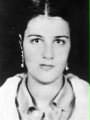
Zarrin Muqimi-Abyanih, one of 10 Bahá’í women executed in Shiraz on 18 June 1983. The primary charge against her: teaching Bahá’í children’s classes. Reproduced with permission of the Bahá’í International Community at http://media.bahai.org/ .

Let there be no compulsion in religion. Truth stands out clear from error; whoever rejects evil and believes in Allah hath grasped the most trustworthy hand-hold, that never breaks. And Allah heareth and knoweth all things.

Allah is the Protector of those who have faith: from the depths of darkness He will lead them forth into light. Of those who reject faith the patrons are the Evil Ones: from light they will lead them forth into the depths of darkness. They will be companions of the fire, to dwell therein (for ever).

The Qur’an (2: 256 & 257)


Zarrin Muqimi-Abyanih was one of ten Bahá’í women hung on June 18, 1983 in Shiraz by the current regime of religious leaders ruling Iran. Their principle crime was teaching children’s classes. Here is a loving tribute in her memory. 

http://www.youtube.com/watch?v=mKiBDCIyLVg 

Courtesy of Bahá’í Reaching and Teaching at http://teachingandprojects.com/.

No unbiased mind can fail to see who represents truth and who is in error and has grasped evil. Any fair-minded person can see who has walked into the light and who is a patron of the Evil Ones and is walking into the depths of darkness. God hears and knows all things.

Allah commands justice, the doing of good, and liberality to kith and kin, and He forbids all shameful deeds, and injustice and rebellion: He instructs you, that ye may receive admonition.

The Qur’an (16: 90)

Courage and shame in Iran


Muna Mahmudnizhad, 17, was one of 10 Bahá’í women executed in Shiraz on 18 June 1983. The primary charge against her: teaching Bahá’í children’s classes. Reproduced with permission of the Bahá’í International Community  at http://media.bahai.org/.


“Let there be no compulsion in religion.”   Qur’án (2:256)


I beseech Thee, O my God, by the light of Thy countenance which impelled them who are nigh unto Thee to meet the darts of Thy decree, and such as are devoted to Thee to face the swords of Thine enemies in Thy path, to write down for me with Thy most exalted Pen what Thou hast written down for Thy trusted ones and Thy chosen ones. Thou seest me, O my God, holding to Thy Name, the Most Holy, the Most Luminous, the Most Mighty, the Most Great, the Most Exalted, the Most Glorious, and clinging to the hem of the robe to which have clung all in this world and in the world to come.

Bahá’u’lláh


June 18th may one day be a national holiday in Iran to honor religious freedom, courage, and devotion to God. Today, though, this is Iran’s national week of shame, the anniversary week of that date in 1983 when ten steadfast and courageous Bahá’í women were hung in Shiraz by the current regime for teaching children’s classes. It was but one episode of a waive of bloodletting against the Bahá’ís carried out by a fanatical clergy that had finally accomplished its long-cherished goal of establishing itself as the secular power in that country.  A clearer proof that those today in power in Iran have strayed very far from the Qur’an and the true purpose of religion can scarcely be imagined.

The Bahá’í youth of Shiraz have beautifully performed one of Bahá’u’lláh’s prayers, which can be viewed through the link below. This powerful prayer is chanted in the original Arabic with musical accompaniment, and with English translation shown in front of changing images.   It’s melodious and rhythmic pattern, together with its length (20 minutes) allows the viewer to relax and meditate and infuse one’s soul with the Lord’s matchless utterance. It is a fasting prayer, but its words and message, so beautifully rendered, are for any time of year. The passage quoted above is from that prayer.

http://vodpod.com/watch/821569-bah-prayer-for-the-fast-bahai-faith


Adorning the cause of womanhood

   Tahirih Siyavushi   Mahshid Nirumand   Akhtar Thabit   Zarrin Muqimi-Abyánih   Nusrat Yalda'i   Simin Sabiri   Shahin Dalvand   Ruya Ishraqi   Izzat Ishraqi   Mona Mahmudnizhad

Photos and article reproduced with permission of the Bahá’í International Community.  www.media.bahai.org

“Let there be no compulsion in religion.”   Qur’án (2:256)


Confirmations from the kingdom of God will assuredly be received, enabling some radiant leaves to appear resplendent in the assemblage of this world with clear proofs and convincing reasons, which will adorn the cause of womanhood. They will prove that in this cycle women are equal to men, nay, in certain respects they will excel.

~

In this wondrous Dispensation the favours of the Glorious Lord are vouchsafed unto the handmaidens of the Merciful. Therefore, they should, like unto men, seize the prize and excel in the field, so that it will be proven and made manifest that the penetrative influence of the Word of God in this new Dispensation hath caused women to be equal with men, and that in the arena of tests they will outdo others.

‘Abdu’l-Bahá


This Friday, June 18th, marks the anniversary of a tragic episode that starkly reveals the true character of the fundamentalist regime that rules Iran. Ten faithful, courageous, and undaunted women, ranging in age from 17 to 57 years (Mona was the youngest) were executed by hanging in Shiraz, Iran on 18 June 1983.  The primary charge against them was teaching Bahá’i children’s classes.  Here is the article from the Bahá’í International Community. Those responsible for their deaths are still running the country today and have not changed their goal: the eradication of the Bahá’í Faith in Iran.

“Ranging in age from 17 to 57, the ten Bahá’í women were led to the gallows in succession. Authorities apparently hoped that as each saw the others slowly strangle to death, they would renounce their own faith.

But according to eyewitness reports, the women went to their fate singing and chanting, as though they were enjoying a pleasant outing.

One of the men attending the gallows confided to a Bahá’í: “We tried saving their lives up to the last moment, but one by one, first the older ladies, then the young girls, were hanged while the others were forced to watch, it being hoped that this might induce them to recant their belief. We even urged them to say they were not Bahá’ís, but not one of them agreed; they preferred the execution.”

All of the women had been interrogated and tortured in the months leading up to their execution. Indeed, some had wounds still visible on their bodies as they lay in the morgue after their execution.

The youngest of these martyrs was Muna Mahmudnizhad, a 17-year-old schoolgirl who because of her youth and conspicuous innocence became, in a sense, a symbol of the group. In prison, she was lashed on the soles of her feet with a cable and forced to walk on bleeding feet.

Yet she never waivered in her faith, even to the point of kissing the hands of her executioner, and then the rope, before putting it around her own throat.

Another young woman, Zarrin Muqimi-Abyanih, 28, told the interrogators whose chief goal was to have her disavow her faith: “Whether you accept it or not, I am a Bahá’í. You cannot take it away from me. I am a Bahá’í with my whole being and my whole heart.”

During the trial of another of the women, Ruya Ishraqi, a 23-year-old veterinary student, the judge said: “You put yourselves through this agony only for one word: just say you are not a Bahá’í and I’ll see that…you are released…” Ms. Ishraqi responded: “I will not exchange my faith for the whole world.”

The names of the other women hanged on 18 June 1983 were: Shahin Dalvand, 25, a sociologist; Izzat Janami Ishraqi, 57, a homemaker; Mahshid Nirumand, 28, who had qualified for a degree in physics but had it denied her because she was a Bahá’í; Simin Sabiri, 25; Tahirih Arjumandi Siyavushi, 30, a nurse; Akhtar Thabit, 25, also a nurse; Nusrat Ghufrani Yalda’i, 47, a mother and member of the local Bahá’í Spiritual Assembly.

All had seen it as their duty to teach Bahá’í religious classes — especially since the government had barred Bahá’í children from attending even regular school.”