Anniversary of the Declaration of the Báb

The upper portion of the building where the Báb declared His mission on 23 May 1844 in Shiraz, Iran, before its destruction in 1979. Reproduced with permission of the Bahá’í International Community. http://media.bahai.org/


Here is the enrapturing and riveting account of Mulla Husayn’s first meeting with the Báb during which he became His first follower and participated in the inauguration of a new religious dispensation. Mulla Husayn had been a disciple of the late Siyyid Kazim, who had instructed his followers that when he died, they should leave and seek the Promised One. This is what Mulla Husayn was doing as he entered the city of Shiraz. 


The Dawn-Breakers

by Nabil-i-A’zam

Translated & edited by Shoghi Effendi

On that very day, a few hours before sunset, whilst walking outside the gate of the city, his eyes fell suddenly upon a Youth of radiant countenance, who wore a green turban and who, advancing towards him, greeted him with a smile of loving welcome. He embraced Mulla Husayn with tender affection as though he had been his intimate and lifelong friend. Mulla Husayn thought Him at first to be a disciple of Siyyid Kazim who, on being informed of his approach to Shiraz, had come out to welcome him.

Mirza Ahmad-i-Qazvini, the martyr, who on several occasions had heard Mulla Husayn recount to the early believers the story of his moving and historic interview with the Báb, related to me the following: “I have heard Mulla Husayn repeatedly and graphically describe the circumstances of that remarkable interview: ‘The Youth who met me outside the gate of Shiraz overwhelmed me with expressions of affection and loving-kindness. He extended to me a warm invitation to visit His home, and there refresh myself after the fatigues of my journey. I prayed to be excused, pleading that my   two companions had already arranged for my stay in that city, and were now awaiting my return. “Commit them to the care of God,” was His reply; “He will surely protect and watch over them.” Having spoken these words, He bade me follow Him. I was profoundly impressed by the gentle yet compelling manner in which that strange Youth spoke to me. As I followed Him, His gait, the charm of His voice, the dignity of His bearing, served to enhance my first impressions of this unexpected meeting.

“‘We soon found ourselves standing at the gate of a house of modest appearance. He knocked at the door, which was soon opened by an Ethiopian servant. “Enter therein in peace, secure,” were His words as He crossed the threshold  and motioned me to follow Him. His invitation, uttered with power and majesty, penetrated my soul. I thought it a good augury to be addressed in such words, standing as I did on the threshold of the first house I was entering in Shiraz, a city the very atmosphere of which had produced already an indescribable impression upon me. Might not my visit to this house, I thought to myself, enable me to draw nearer to the Object of my quest? Might it not hasten the termination of a period of intense longing, of strenuous search, of increasing anxiety, which such a quest involves? As I entered the house and followed my Host to His chamber, a feeling of unutterable joy invaded my being. Immediately  we were seated, He ordered a ewer of water to be brought, and bade me wash away from my hands and feet the stains of travel. I pleaded permission to retire from His presence and perform my ablutions in an adjoining room. He refused to grant my request, and proceeded to pour the water over my hands. He then gave me to drink of a refreshing beverage, after which He asked for the samovar and Himself prepared the tea which He offered me.

“‘Overwhelmed with His acts of extreme kindness, I arose to depart. “The time for evening prayer is approaching,” I ventured to observe. “I have promised my friends to join them at that hour in the Masjid-i-Ilkhani.” With extreme courtesy and calm He replied: “You must surely have made the hour of your return conditional upon the will and pleasure of God. It seems that His will has decreed otherwise. You need have no fear of having broken your pledge.” His dignity and self-assurance silenced me I renewed my ablutions and prepared for prayer. He, too, stood beside me and prayed. Whilst praying, I unburdened my soul, which was much oppressed, both by the mystery of this interview and the strain and stress of my search. I breathed this prayer: “I have striven with all my soul, O my God, and until now have failed to find Thy promised Messenger. I testify that Thy word faileth not, and that Thy promise is sure.”

“‘That night, that memorable night, was the eve preceding the fifth day of Jamadiyu’l-Avval, in the year 1260 A.H.  It was about an hour after sunset when my youthful Host began to converse with me. “Whom, after Siyyid Kazim,” He asked me, “do you regard as his successor and your leader?” “At the hour of his death,” I replied, “our departed teacher insistently exhorted us to forsake our homes, to scatter far and wide, in quest of the promised Beloved. I have, accordingly, journeyed to Persia, have arisen to accomplish his will, and am still engaged in my quest.” “Has your teacher,” He further enquired, “given you any detailed indications as to the distinguishing features of the promised One?” “Yes,” I replied, “He is of a pure lineage, is of illustrious descent, and of the seed of Fatimih. As to His age, He is more than twenty and less than thirty. He is endowed with innate knowledge. He is of medium height, abstains from smoking, and is free from bodily deficiency.” He paused for a while and then with vibrant voice declared: “Behold, all these signs are manifest in Me!” He then considered each of the above-mentioned signs separately, and conclusively demonstrated that each and all were applicable to His person. I was greatly surprised, and politely observed: “He whose advent we await is a Man of unsurpassed holiness, and the Cause He is to reveal, a Cause of tremendous power. Many and diverse are the requirements which He who claims to be its visible embodiment must needs fulfil. How often has Siyyid Kazim referred to the vastness of the knowledge of the promised One! How often did he say: ‘My own knowledge is but a drop compared with that with which He has been endowed. All my attainments are but a speck of dust in the face of the immensity of His knowledge. Nay, immeasurable is the difference!'” No sooner had those words dropped from my lips than I found myself seized with fear and remorse, such as I could neither conceal nor explain. I bitterly reproved myself, and resolved at that very moment to alter my attitude and to soften my tone. I vowed to God that should my Host again refer to the subject, I would, with the utmost humility, answer and say: “If you be willing to substantiate your claim, you will most assuredly deliver me from the anxiety and suspense which so heavily oppress my soul. I shall truly be indebted to you for such deliverance.” When I first started upon my quest, I determined to regard the two following standards as those whereby I could ascertain the truth of whosoever might claim to be the promised Qá’im. The first was a treatise which I had myself composed, bearing upon the abstruse and hidden teachings propounded by Shaykh Ahmad and Siyyid Kazim. Whoever seemed to me capable of unravelling the mysterious allusions made in that treatise, to him I would next submit my second request, and would ask him to reveal, without the least hesitation or reflection, a commentary on the Surih of Joseph, in a style and language entirely different from the prevailing standards of the time. I had previously requested Siyyid Kazim, in private, to write a commentary on that same Surih, which he refused, saying: “This is, verily, beyond me. He, that great One, who comes after me will, unasked, reveal it for you. That commentary will constitute one of the weightiest testimonies of His truth, and one of the clearest evidences of the loftiness of His position.”

“‘I was revolving these things in my mind, when my distinguished Host again remarked: “Observe attentively. Might not the Person intended by Siyyid Kazim be none other than I?” I thereupon felt impelled to present to Him a copy of the treatise which I had with me. “Will you,” I asked Him, “read this book of mine and look at its pages with indulgent eyes? I pray you to overlook my weaknesses and failings.” He graciously complied with my wish. He opened the book, glanced at certain passages, closed it, and began to address me. Within a few minutes He had, with characteristic vigour and charm, unravelled all its mysteries and resolved all its problems. Having to my entire satisfaction accomplished, within so short a time, the task I had expected Him to perform, He further expounded to me certain truths which could be found neither in the reported sayings of the imams of the Faith nor in the writings of Shaykh Ahmad and Siyyid Kazim. These truths, which I had never heard before, seemed to be endowed with refreshing vividness and power. “Had you not been My guest,” He afterwards  observed, “your position would indeed have been a grievous one. The all-encompassing grace of God has saved you. It is for God to test His servants, and not for His servants to judge Him in accordance with their deficient standards. Were I to fail to resolve your perplexities, could the Reality that shines within Me be regarded as powerless, or My knowledge be accused as faulty? Nay, by the righteousness of God! it behoves, in this day, the peoples and nations of both the East and the West to hasten to this threshold, and here seek to obtain the reviving grace of the Merciful. Whoso hesitates will indeed be in grievous loss. Do not the peoples of the earth testify that the fundamental purpose of their creation is the knowledge and adoration of God? It behoves them to arise, as earnestly and spontaneously as you have arisen, and to seek with determination and constancy their promised Beloved.” He then proceeded to say: “Now is the time to reveal the commentary on the Surih of Joseph.” He took up His pen and with incredible rapidity revealed the entire Surih of Mulk, the first chapter of His commentary on the Surih of Joseph. The overpowering effect of the manner in which He wrote was heightened by the gentle intonation of His voice which accompanied His writing. Not for one moment did He interrupt the flow of the verses which streamed from His pen. Not once did He pause till the Surih of Mulk was finished. I sat enraptured by the magic of His voice and the sweeping force of His revelation. At last I reluctantly arose from my seat and begged leave to depart. He smilingly bade me be seated, and said: “If you leave in such a state, whoever sees you will assuredly say: ‘This poor youth has lost his mind.'” At that moment the clock registered two hours and eleven minutes after sunset. That night, the eve of the fifth day of Jamadiyu’l-Avval, in the year 1260 A.H., corresponded with the eve preceding the sixty-fifth day after Naw-ruz, which was also the eve of the sixth day of Khurdad, of the year Nahang. “This night,” He declared, “this very hour will, in the days to come, be celebrated as one of the greatest and most significant of all festivals. Render thanks  to God for having graciously assisted you to attain your heart’s desire, and for having quaffed from the sealed wine of His utterance. ‘Well is it with them that attain thereunto.'”

“‘At the third hour after sunset, my Host ordered the dinner to be served. That same Ethiopian servant appeared again and spread before us the choicest food. That holy repast refreshed alike my body and soul. In the presence of my Host, at that hour, I felt as though I were feeding upon the fruits of Paradise. I could not but marvel at the manners and the devoted attentions of that Ethiopian servant whose very life seemed to have been transformed by the regenerating influence of his Master. I then, for the first time, recognized the significance of this well-known traditional utterance ascribed to Muhammad: “I have prepared for the godly and righteous among My servants what eye hath seen not, ear heard not, nor human heart conceived.” Had my youthful Host no other claim to greatness, this were sufficient — -that He received me with that quality of hospitality and loving-kindness which I was convinced no other human being could possibly reveal.

“‘I sat spellbound by His utterance, oblivious of time and of those who awaited me. Suddenly the call of the muadhdhin, summoning the faithful to their morning prayer, awakened me from the state of ecstasy into which I seemed to have fallen. All the delights, all the ineffable glories, which the Almighty has recounted in His Book as the priceless possessions of the people of Paradise — these I seemed to be experiencing that night. Methinks I was in a place of which it could be truly said: “Therein no toil shall reach us, and therein no weariness shall touch us”; “No vain discourse shall they hear therein, nor any falsehood, but only the cry, ‘Peace! Peace!'”; “Their cry therein shall be, ‘Glory be to Thee, O God!’ and their salutation therein, ‘Peace!’ And the close of their cry, ‘Praise be to God, Lord of all creatures!'”

“‘Sleep had departed from me that night. I was enthralled by the music of that voice which rose and fell as He chanted; now swelling forth as He revealed verses of the Qayyúmu’l-Asmá’, again acquiring ethereal, subtle harmonies as He uttered the prayers He was revealing.  At the end of each invocation, He would repeat this verse: “Far from the glory of thy Lord, the All-Glorious, be that which His creatures affirm of Him! And peace be upon His Messengers! And praise be to God, the Lord of all beings!”

“‘He then addressed me in these words: “O thou who art the first to believe in Me! Verily I say, I am the Báb, the Gate of God, and thou art the Babu’l-Bab, the gate of that Gate. Eighteen souls must, in the beginning, spontaneously and of their own accord, accept Me and recognize the truth of My Revelation. Unwarned and uninvited, each of these must seek independently to find Me. And when their number is complete, one of them must needs be chosen to accompany Me on My pilgrimage to Mecca and Medina. There I shall deliver the Message of God to the Sharif of Mecca. I then shall return to Kufih, where again, in the Masjid of that holy city, I shall manifest His Cause. It is incumbent upon you not to divulge, either to your companions or to any other soul, that which you have seen and heard. Be engaged in the Masjid-i-Ilkhani in prayer and in teaching. I, too, will there join you in congregational prayer. Beware lest your attitude towards Me betray the secret of your faith. You should continue in this occupation and maintain this attitude until our departure for Hijaz. Ere we depart, we shall appoint unto each of the eighteen souls his special mission, and shall send them forth to accomplish their task. We shall instruct them to teach the Word of God and to quicken the souls of men.” Having spoken these words to me, He dismissed me from His presence. Accompanying  me to the door of the house, He committed me to the care of God.

“‘This Revelation, so suddenly and impetuously thrust upon me, came as a thunderbolt which, for a time, seemed to have benumbed my faculties. I was blinded by its dazzling splendour and overwhelmed by its crushing force. Excitement, joy, awe, and wonder stirred the depths of my soul. Predominant among these emotions was a sense of gladness and strength which seemed to have transfigured me. How feeble and impotent, how dejected and timid, I had felt previously! Then I could neither write nor walk, so tremulous were my hands and feet. Now, however, the knowledge of His Revelation had galvanised my being. I felt possessed of such courage and power that were the world, all its peoples and its potentates, to rise against me, I would, alone and undaunted, withstand their onslaught. The universe seemed but a handful of dust in my grasp. I seemed to be the Voice of Gabriel personified, calling unto all mankind: “Awake, for lo! the morning Light has broken. Arise, for His Cause is made manifest. The portal of His grace is open wide; enter therein, O peoples of the world! For He who is your promised One is come!”


Want to buy this book? Go to http://www.bahaibookstore.com/

Courage & Sacrifice: the importance of children’s classes

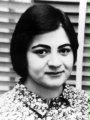
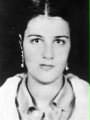
Tahirih Siyavushi    Mahshid Nirumand   Akhtar Thabit   Zarrin Muqimi-Abyánih   Nusrat Yalda'i   Simin Sabiri   Shahin Dalvand   Ruya Ishraqi   Izzat Ishraqi   Mona Mahmudnizhad

Photos and article reproduced with permission of the Bahá’í International Community.  www.media.bahai.org


“Let there be no compulsion in religion.”   Qur’án (2:256/257)


We hope that you take to heart the importance of the religious and moral education of your children. Here is the story of some who did. These ten faithful, courageous, and undaunted women, ranging in age from 17 to 57 years (Mona was the youngest) were executed by hanging in Shiraz, Iran on 18 June 1983.  The primary charge against them was teaching Bahá’i children’s classes.  Here is the article from the Bahá’í International Community. Those responsible for their deaths are still running the country today and have not changed their goal: the eradication of the Bahá’í Faith in Iran.

“Ranging in age from 17 to 57, the ten Bahá’í women were led to the gallows in succession. Authorities apparently hoped that as each saw the others slowly strangle to death, they would renounce their own faith.

But according to eyewitness reports, the women went to their fate singing and chanting, as though they were enjoying a pleasant outing.

One of the men attending the gallows confided to a Bahá’í: “We tried saving their lives up to the last moment, but one by one, first the older ladies, then the young girls, were hanged while the others were forced to watch, it being hoped that this might induce them to recant their belief. We even urged them to say they were not Bahá’ís, but not one of them agreed; they preferred the execution.”

All of the women had been interrogated and tortured in the months leading up to their execution. Indeed, some had wounds still visible on their bodies as they lay in the morgue after their execution.

The youngest of these martyrs was Muna Mahmudnizhad, a 17-year-old schoolgirl who because of her youth and conspicuous innocence became, in a sense, a symbol of the group. In prison, she was lashed on the soles of her feet with a cable and forced to walk on bleeding feet.

Yet she never waivered in her faith, even to the point of kissing the hands of her executioner, and then the rope, before putting it around her own throat.

Another young woman, Zarrin Muqimi-Abyanih, 28, told the interrogators whose chief goal was to have her disavow her faith: “Whether you accept it or not, I am a Bahá’í. You cannot take it away from me. I am a Bahá’í with my whole being and my whole heart.”

During the trial of another of the women, Ruya Ishraqi, a 23-year-old veterinary student, the judge said: “You put yourselves through this agony only for one word: just say you are not a Bahá’í and I’ll see that…you are released…” Ms. Ishraqi responded: “I will not exchange my faith for the whole world.”

The names of the other women hanged on 18 June 1983 were: Shahin Dalvand, 25, a sociologist; Izzat Janami Ishraqi, 57, a homemaker; Mahshid Nirumand, 28, who had qualified for a degree in physics but had it denied her because she was a Bahá’í; Simin Sabiri, 25; Tahirih Arjumandi Siyavushi, 30, a nurse; Akhtar Thabit, 25, also a nurse; Nusrat Ghufrani Yalda’i, 47, a mother and member of the local Bahá’í Spiritual Assembly.

All had seen it as their duty to teach Bahá’í religious classes — especially since the government had barred Bahá’í children from attending even regular school.”

Courage & Sacrifice: Haji Sulayman Khan

The body of a newly martyred Bábí (an early Bahá’í) is proudly shown at the entrance to a village in Iran about 1850.  Courtesy www.bahai-biblio.org.


“Let there be no compulsion in religion.”    Qur’an (2:256/257)


In August 1852, two obscure and irresponsible young men, followers of the recently executed Báb, frustrated by years of unrelenting and barbaric persecution by a clergy and government provoked only by the expression of religious beliefs, foolishly tried to assassinate the Shah of Persia. The attempt was not well planned and could not have succeeded. However, it gave the clergy and government an opportunity to unleash the hatred in their souls for the new and astonishingly successful religion of the Báb, He who had proclaimed Himself to be the successor to the Prophet Muhammad and the precursor of one Whom He identfied as He Whom God shall make manifest (Bahá’u’lláh). What ensued was a bloodbath of persecution throughout Persia. Here is the story of one of those martyrdoms. It reveals the complete devotion to their Lord and detachment from the ephemeral things of this earth held by so many of the early Bábís and Bahá’ís.

The Story of the Joyous Martyrdom of Haji Sulayman Khan

from The Dawn-Breakers

by Nabil-A’zam

Translated and edited by Shoghi Effendi

Among those who, in the midst of the general confusion, were seized and thrown into prison was Haji Sulayman Khan, the circumstances of whose martyrdom I now proceed to relate. The facts I mention have been carefully sifted and verified by me, and I owe them, for the most part, to Aqay-i-Kalim, who was himself in those days in Tihran and was made to share the terrors and sufferings of his brethren. “On the very day of Haji Sulayman Khan’s martyrdom,” he informed me, “I happened to be present, with Mirza Abdu’l-Majid, at a gathering in Tihran at which a considerable number of the notables and dignitaries of the capital were present. Among them was Haji Mulla Mahmud, the Nizamu’l-‘Ulama, who requested the Kalantar to describe the actual circumstances of the death of Haji Sulayman Khan. The Kalantar motioned with his finger to Mirza Taqi, the kad-khuda who, he said, had conducted the victim from the vicinity of the imperial palace to the place of his execution, outside the gate of Naw. Mirza Taqi was accordingly requested to relate to those present all that he had seen and heard. ‘I and my assistants,’ he said, ‘were ordered to purchase nine candles and to thrust them, ourselves into deep holes we were to cut in his flesh. We were instructed to light each one of these candles and to conduct him through the market to the accompaniment of drums and trumpets as far as the place of his execution. There we were ordered to hew his body into two halves, each of which we were asked to suspend on either side of the gate of Naw. He himself chose the manner in which he wished to be martyred. Hajibu’d-Dawlih had been commanded by Násiri’d-Dín Sháh to enquire into the complicity of the accused, and, if assured of his innocence, to induce him to recant. If he submitted, his life was to be spared and he was to be detained pending the final settlement of his case. In the event of his refusal, he was to be put to death in whatever manner he himself might desire.


“‘The investigation of hajibu’d-Dawlih convinced him of the innocence of Haji Sulayman Khan. The accused, as soon as he had been informed of the instructions of his sovereign, was heard joyously exclaiming: “Never, so long as my life-blood continues to pulsate in my veins, shall I be willing to recant my faith in my Beloved! This world which the Commander of the Faithful has likened to carrion will never allure me from my heart’s Desire.” He was asked to  determine the manner in which he wished to die. “Pierce holes in my flesh,” was the instant reply, “and in each wound place a candle. Let nine candles be lighted all over my body, and in this state conduct me through the streets of Tihran. Summon the multitude to witness the glory of my martyrdom, so that the memory of my death may remain imprinted in their hearts and help them, as they recall the intensity of my tribulation, to recognize the Light I have embraced. After I have reached the foot of the gallows and have uttered the last prayer of my earthly life, cleave my body in twain and suspend my limbs on either side of the gate of Tihran, that the multitude passing beneath it may witness to the love which the Faith of the Báb has kindled in the hearts of His disciples, and may look upon the proofs of their devotion.”


“‘Hajibu’d-Dawlih instructed his men to abide by the expressed wishes of Haji Sulayman Khan, and charged me to conduct him through the market as far as the place of his execution. As they handed to the victim the candles they had purchased, and were preparing to thrust their knives into his breast, he made a sudden attempt to seize the weapon from the executioner’s trembling hands in order to plunge it himself into his flesh. “Why fear and hesitate?” he cried, as he stretched forth his arm to snatch the knife from his grasp. “Let me myself perform the deed and light the candles.” Fearing lest he should attack us, I ordered my men to resist his attempt and bade them tie his hands behind his back. “Let me,” he pleaded, point out with my fingers the places into which I wish them to thrust their dagger, for I have no other request to make besides this.”


“‘He asked them to pierce two holes in his breast, two in his shoulders, one in the nape of his neck, and the four others in his back. With stoic calm he endured those tortures. Steadfastness glowed in his eyes as he maintained a mysterious and unbroken silence. Neither the howling of the multitude nor the sight of the blood that streamed all over his body could induce him to interrupt that silence. Impassive and serene he remained until all the nine candles were placed in position and lighted.


“‘When all was completed for his march to the scene  of his death, he, standing erect as an arrow and with that same unflinching fortitude gleaming upon his face, stepped forward to lead the concourse that was pressing round him to the place that was to witness the consummation of his martyrdom. Every few steps he would interrupt his march and, gazing at the bewildered bystanders, would shout: “What greater pomp and pageantry than those which this day accompany my progress to win the crown of glory! Glorified be the Báb, who can kindle such devotion in the breasts of His lovers, and can endow them with a power greater than the might of kings!” At times, as if intoxicated with the fervour of that devotion, he would exclaim: “The Abraham of a bygone age, as He prayed God, in the hour of bitter agony, to send down upon Him the refreshment for which His soul was crying, heard the voice of the Unseen proclaim: ‘O fire! Be thou cold, and to Abraham a safety!But this Sulayman is crying out from the depths of his ravaged heart: ‘Lord, Lord, let Thy fire burn unceasingly within me, and suffer its flame to consume my being.'” As his eyes saw the wax flicker in his wounds, he burst forth in an acclamation of frantic delight: “Would that He whose hand has enkindled my soul were here to behold my state!” “Think me not to be intoxicated with the wine of this earth!” he cried to the vast throng who stood aghast at the sight of his behaviour. It is the love of my Beloved that has filled my soul and made me feel endowed with a sovereignty which even kings might envy!”


“‘I cannot recall the exclamations of joy which fell from his lips as he drew near to his end. All I remember are but a few of the stirring words which, in his moments of exultation, he was moved to cry out to the concourse of spectators. Words fail me to portray the expression of that countenance or to measure the effect of his words on the multitude.


“‘He was still in the bazaar when the blowing of a breeze excited the burning of the candles that were placed upon his breast. As they melted rapidly, their flames reached the level of the wounds into which they had been thrust. We who were following a few steps behind him could hear distinctly the sizzling of his flesh. The sight of gore and fire which covered his body, instead of silencing his voice, appeared to heighten his unquenchable enthusiasm. He could still be heard, this time addressing the flames, as they ate into his wounds: “You have long lost your sting, O flames, and have been robbed of your power to pain me. Make haste, for from your very tongues of fire I can hear the voice that calls me to my Beloved!”


“‘Pain and suffering seemed to have melted away in the ardour of that enthusiasm. Enveloped by the flames, he walked as a conqueror might have marched to the scene of his victory. He moved through the excited crowd a blaze of light amidst the gloom that surrounded him. Arriving at the foot of the gallows, he again raised his voice in a last appeal to the multitude of onlookers: “Did not this Sulayman whom you now see before you a prey to fire and blood, enjoy until recently all the favours and riches the world can bestow? What could have caused him to renounce this earthly glory and accept in return such great degradation and suffering?” Prostrating himself in the direction of the shrine of the Imam-Zadih Hasan, he murmured certain words in Arabic which I could not understand. “My work is now finished!” he cried to the executioner, as soon as his prayer was ended. “Come and do yours!” He was still alive when his body was hewn into two halves with a hatchet. The praise of his Beloved, despite such incredible sufferings, lingered upon his lips until the last moment of his life.’


Want to buy this book? Go to www.bahaibookstore.com.


Early Tacoma Bahá’ís – Lyle Ames


Lyle Ames, right, and Victor Frank, center, make a presentation to a local  government leader in an undated photograph. 


Lyle Ames


It can be said of Lyle Ames that he was a man of few words and many deeds.  He was strong, handsome, and physically fit. Loyalty, reliability, and trustworthiness were essential ingredients of his character.  It was his nature to help people. He was always helping someone, but he never talked much about it.  He accepted people pretty much as he found them. He did not make Judgments, but his appeal was to one’s reason, one’s intelligence, one’s higher nature.


Lyle did not have an easy life, but perhaps that’s what gave him his strength of character.  He was born in Tamahawk, Wisconsin on May 14, 1907 of an American/English father and an Indian mother of the Ojibway Tribe, the largest tribe of the Algonquin family.  Lyle was the second of four children born to Beardsley and Emma Ames.  His father was a cook, a rancher and a railroad blacksmith, so the family was always on the move in Wisconsin, Michigan, and Montana.


In those days, much of these lands were a wilderness.  They lived in log cabins in the backwoods, a life on the frontier.  Lyle’s education was acquired in a one-room schoolhouse, and one of his classmates was the well-known writer, A.B. Guthrie, who wrote “The Big Sky”.  In that little schoolhouse, Lyle acquired a love of learning and reading which he retained all his life.


One winter in Montana, his father left permanently.  His younger brother, Veryl, had just died of T.B. That left Lyle with his older brother Les, his mother, and his little sister, Orma.  They had one bag of flour, and Lyle said that they just barely survived that winter!


His mother and the young family began hewing their way in the wilderness.  They grew a little garden in the brush-cleared wilds, and Les and Lyle fished and hunted moose, elk, deer, pheasant, rabbit, and squirrel. Les and Lyle also earned a little by trapping game.  The brothers would leave early in the morning to take their furs to the trading posts and return late at night, with packs of wolves literally howling at their heels.  This love of nature and ability to survive off the land was in their blood, inherited from their Indian mother, and Lyle had said that the happiest years of his life were spent with Les, hunting, fishing and trapping in the wilderness.  At one point, they even did some mining in the mountains of Idaho.


Lyle adored his older brother, but Les liked to wander and was often far afield, so it fell to Lyle to be responsible for his mother and younger sister.  Lyle developed into an extremely responsible person, accepting his lot faithfully, and in later years befriending many people in many ways.


When.Lyle was still a young teenager his mother moved then to Vashon Island, where they raised chickens, and finally to Tacoma, where he remained.  Lyle knew poverty all his life until the time he started working on the Tacoma waterfront loading and unloading cargo ships.  He was initiated into the Longshoreman’s union in 1929.  This, however, was still not “easy street”,

since it was the year of the stockmarket crash and the beginning of the great depression.  Also, the conditions on the waterfront at that time were those of backbreaking physical labor and brutally long hours.  He participated in the longshoreman’s strikes of the early 1930’s, which were turning points for the improvement of the conditions of waterfront workers.  He spent 43 years on the Tacoma docks and was well respected by his co-workers.


Lyle was married for a short time, but lived mostly with his mother, providing and caring for her in her illness.  He has outlived every member of his family – the last, his father and sister, by 25 years.


In 1960, Lyle married Elsie Larson and embraced her sons and grandsons as his very own, and these became his family:

Gerald Larson of Tacoma

Paul, of Lake Surprise

Grandsons,

Mark, of Woodenville

Rick, of Pullman, Washington State College

Kirk, of Tacoma

And Great-Grandson,

Breck Roy Larson, II


Lyle and Elsie were married 26 years.  When Elsie’s health permitted, they had an active life together, gardening, taking trips, and entertaining family and friends.  Lyle also had a woodshop in his garage and loved to work with wood.


In the early 1950’s, he heard about the Bahá’í Faith from his brother Les, and sister-in-law, Helene and in 1956, he became a Bahá’í.  This was a big turning point for Lyle.  He was already in middle-age when he took on this new way of life and it was not an easy task.  But he worked at it steadily. He struggled. He persevered.  And, little by little, he acquired those qualities of character, that vision, that faith, which enabled him to put into perspective the hardships of his past, the difficulties of his present, the uncertainties of his future, and move forward a fundamentally assured and happy man, at peace with his Maker and with himself.


For 30 years, Lyle was a pillar of the Tacoma Bahá’í Community and served on the Spiritual Assembly as either chairman, treasurer or librarian for virtually the whole of that time.  He lived the Bahá’í teachings to an exemplary degree: his actions reflected his beliefs and he did not waver.  And that is the highest tribute that we can pay to Lyle or to anyone.  He did not waver.  Through all the ups and downs of life, he was steadfast to the end.


Lyle Ames' grave marker


Such are the highlights of Lyle’s long and eventful life.  He has been characterized by some as an oak tree.  We thought he would always be there.  We expected him to last forever.  But this physical life is transitory.  It is not our permanent home.  It is only for passing through so the soul can acquire the qualities and virtues that it needs in its everlasting and eternal home.  Lyle did that, and now his soul has winged its way to its celestial nest.  A job well done, Lyle!


I wish to close with this passage from the Bahá’í writings: 


“It is clear and evident that all men shall, after their physical death, estimate the worth of their deeds, and realize all that their hands have wrought….  They that are the followers of the one true God shall, the moment they depart out of this life, experience such joy and gladness as would be impossible to describe….  Death proffereth unto every confident believer the cup that is life indeed.  It bestoweth joy, and is the bearer of gladness.  It conferreth the gift of everlasting life.”


March 26, 1988


This was the eulogy that was composed by Alda Spell.

It was delivered by Bill Spell at Lyle’s funeral.


I have unsealed the choice wine of My Revelation

Bahá'ís in Baghdad, Iraq about 1940

Persian Bahá’ís in Baghdad about 1940 just before going pioneering elsewhere in Iraq and other Arab countries. Courtesy of www.bahai-biblio.org.


O My servants! Through the might of God and His power, and out of the treasury of His knowledge and wisdom, I have brought forth and revealed unto you the pearls that lay concealed in the depths of His everlasting ocean. I have summoned the Maids of  Heaven to emerge from behind the veil of concealment, and have clothed them with these words of Mine — words of consummate power and wisdom. I have, moreover, with the hand of divine power, unsealed the choice wine of My Revelation, and have wafted its holy, its hidden, and musk-laden fragrance upon all created things. Who else but yourselves is to be blamed if ye choose to remain unendowed with so great an outpouring of God’s transcendent and all-encompassing grace, with so bright a revelation of His resplendent mercy?…

O My servants! There shineth nothing else in Mine heart except the unfading light of the Morn of Divine guidance, and out of My mouth proceedeth naught but the essence of truth, which the Lord your God hath revealed. Follow not, therefore, your earthly desires, and violate not the Covenant of God, nor break your pledge to Him. With firm determination, with the whole affection of your heart, and with the full force of your words, turn ye unto Him, and walk not in the ways of the foolish. The world is but a show, vain and empty, a mere nothing, bearing the semblance of reality. Set not your affections upon it. Break not the bond that uniteth you with your Creator, and be not of those that have erred and strayed from His ways. Verily I say, the world is like the vapor in a desert, which the thirsty dreameth to be water and striveth after it with all his might, until when he cometh unto it, he findeth it to be mere  illusion. It may, moreover, be likened unto the lifeless image of the beloved whom the lover hath sought and found, in the end, after long search and to his utmost regret, to be such as cannot “fatten nor appease his hunger.”

O My servants! Sorrow not if, in these days and on this earthly plane, things contrary to your wishes have been ordained and manifested by God, for days of blissful joy, of heavenly delight, are assuredly in store for you. Worlds, holy and spiritually glorious, will be unveiled to your eyes. You are destined by Him, in this world and hereafter, to partake of their benefits, to share in their joys, and to obtain a portion of their sustaining grace. To each and every one of them you will, no doubt, attain.

                                                                                                                              Bahá’u’lláh

Shirin Ebadi, Nobel Laureate, in Seattle

ebadi120

Shirin Ebadi, the first Muslim woman to win the  Nobel Peace Prize, speaks tonight at Benaroya Hall in Seattle. She is the attorney representing the seven Baha’i leaders in Iran who have suffered through the one-year anniversary of their imprisonment as of May 14th. She has not been permitted by the government to meet them.

She is the first woman to ever serve as a judge in Iran. Forced off of the bench following the 1979 revolution, she later returned to the practice of law as a human rights activist.  Her life has often been threatened because of her work and her courageous pursuit of the human rights of her fellow Iranians.

See her autobiography at this link: http://nobelprize.org/nobel_prizes/peace/laureates/2003/ebadi-autobio.html

Here is a link with information about tonight’s event: http://www.lectures.org/ebadi.html


The seven Bahá'í leaders in prison now for one year due to their religious beliefs


The seven Bahá’í leaders who have now been held in Tehran’s Evin Prison for a full year are, seated from left, Behrouz Tavakkoli and Saeid Rezaie, and, standing, Fariba Kamalabadi, Vahid Tizfahm, Jamaloddin Khanjani, Afif Naeimi, and Mahvash Sabet.


Courtesy of the Bahá’í World News Service. For more on this story and information about other persecution of the Bahá’ís in Iran, please see http://news.bahai.org/.